
A Canadian bank's name may be familiar to a driver looking for car insurance. The quote comes through its separate insurance business, and another company may issue the policy. The insurance website or phone service can confirm whether it offers auto policies in Ontario.
A bank account doesn't mean a driver qualifies for a discount or gets a cheaper quote. The insurance business still has to compete on the price and protection it offers that household.
Use the Separate Insurance Channel
Find the Auto Insurance Service
The insurance business may sell online or by phone. It may also name another licensed service where drivers can get a policy. A bank branch generally isn't the place to buy personal auto insurance. Federal rules limit how branches sell and promote many types of insurance. The type of policy offered on the site matters. A bank that offers travel or life insurance may not offer personal auto coverage in Ontario. A policy tied to a loan serves a different purpose too.
An online quote may be an early estimate. The seller may ask more questions before agreeing to the price. Those questions may cover who drives the car or how it is used. Until the price and coverage are confirmed, the quote isn't a policy.
Check Who Arranges and Issues the Policy
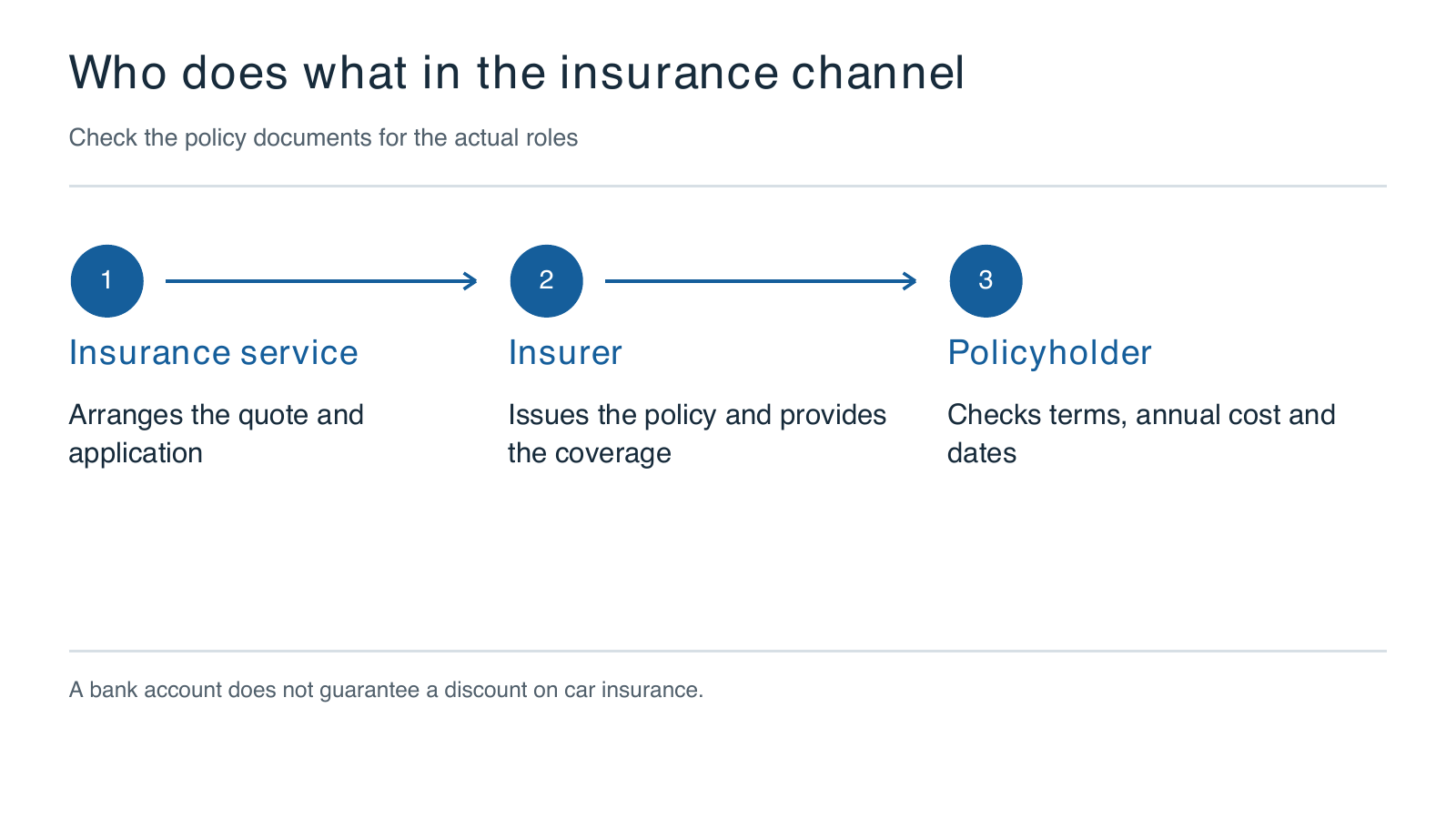
A distributor arranges the policy. The underwriter is the insurer that issues it and takes on the risk. These jobs may be done by different firms. The documents should identify both, even when the website shows one brand.
RBC Insurance Agency Ltd. distributes RBC Insurance's Ontario auto policies. A separate insurer underwrites them. The firm insuring the car is named on the policy and shouldn't be assumed to be Royal Bank of Canada.
The seller can also explain any discount. Holding an account at the bank doesn't mean the driver qualifies. The quote needs to show the discount, and the seller should explain the conditions for getting it.
Car Insurance and Loan Protection Differ
A driver getting a car loan may be offered optional credit protection. It may pay off the loan or cover payments after an event such as death or disability. The contract sets which events qualify. It also sets how much the policy can pay.
The lender may require collision and comprehensive coverage on the car itself. The loan terms may limit the deductible or require proof that this coverage stays in place. A lower quote doesn't change those terms.
The seller can include that coverage if the driver explains what the lender requires before asking for a price. Leaving it out to cut the bill may break the loan agreement.
Banks may offer certain authorized insurance products, including credit-related insurance.
Loan protection doesn't pay the liability or vehicle-damage claims that an auto policy covers.
What Makes the Quote Affordable?
Rules also limit how banking websites promote insurance that banks cannot sell directly.
Drivers may need to go to a separate insurance site for a quote.
Finding affordable car insurance in Ontario means comparing the same coverage with correct driver details. A bank's insurance quote may cost more or less than another quote for that household.
The rule about banking websites doesn't tell drivers whether the price will be high or low. Each quote should use the same address, yearly kilometres and driving history. The account of who drives the car and how it is used should match too. Leaving someone out or describing paid deliveries as personal use can give a wrong price and cause coverage problems.
The driver can compare liability limits and accident benefits, then check collision and comprehensive coverage. The deductibles and added terms should match too. A lower bill may leave more to pay after a loss.
Ontario changed its accident-benefit rules in July 2026. A new policy may have different benefits from the current renewal. Existing policies keep their previous benefits at renewal unless the customer agrees in writing to changes. Both sets of documents should show which benefits are included.
Group rates, multi-vehicle discounts and winter tires may affect the price. Buying home insurance with auto insurance may also earn a discount. Before moving a home or tenant policy, the household should compare the total yearly bill. The coverage on both policies needs to be suitable too.
Identify the Insurer and Policy Terms
The insurer is responsible for the contract. The seller should explain who handles claims and where to get help once the policy starts. Some requests may go through the seller, while others go to the insurer.
Ontario licensing and consumer rules still apply to insurance sold through a business linked to a bank. For an insurance complaint about service or a claim, the customer should use the insurer's stated process.
They shouldn't assume their bank account manager handles it.
If an insurer fails, protection for its customers is separate from protection for bank deposits. The Property and Casualty Insurance Compensation Corporation protects eligible policies from its member insurers. Its rules say which claims it covers and how much it pays. The insurer and policy determine whether that protection applies. The customer's bank balance doesn't.
Changing the car or address on the policy may involve the seller or insurer. The banking app may not offer those services.
Compare the Yearly Price Before Switching
Gather the Details Once
The current policy documents are a starting point. The seller will also ask for the drivers' licence details and history. The car's year, model and identification number describe the vehicle. Its actual use and estimated yearly kilometres should be reported too. Recording coverage changes separately shows whether a lower bill comes from a different rate, a larger deductible or removed coverage.
Confirm the Price and Dates
Monthly payment charges belong in the yearly cost. Leaving the old policy before renewal may also mean paying a fee, which reduces the saving.
Before the old policy ends, the new coverage should be confirmed with no gap between the dates. The new policy documents and proof of insurance should come from the seller or insurer. A convenient bank account doesn't replace those insurance services.
Date: 18.10.2026
Get your content published on BanksDAILY.com in just a few clicks.
- Updatings
- Doha BankOctober 13, 2026
- Doha Bank UAEOctober 13, 2026
- Bank of PontiacOctober 11, 2026
- Coastal Community BankOctober 11, 2026
- Oberbank HungaryOctober 10, 2026
Smart Investing
Buy $BD digital coins and become an essential part of the BanksDAILY project! We create a culture of ownership using secure and fast blockchain technology!
More info...